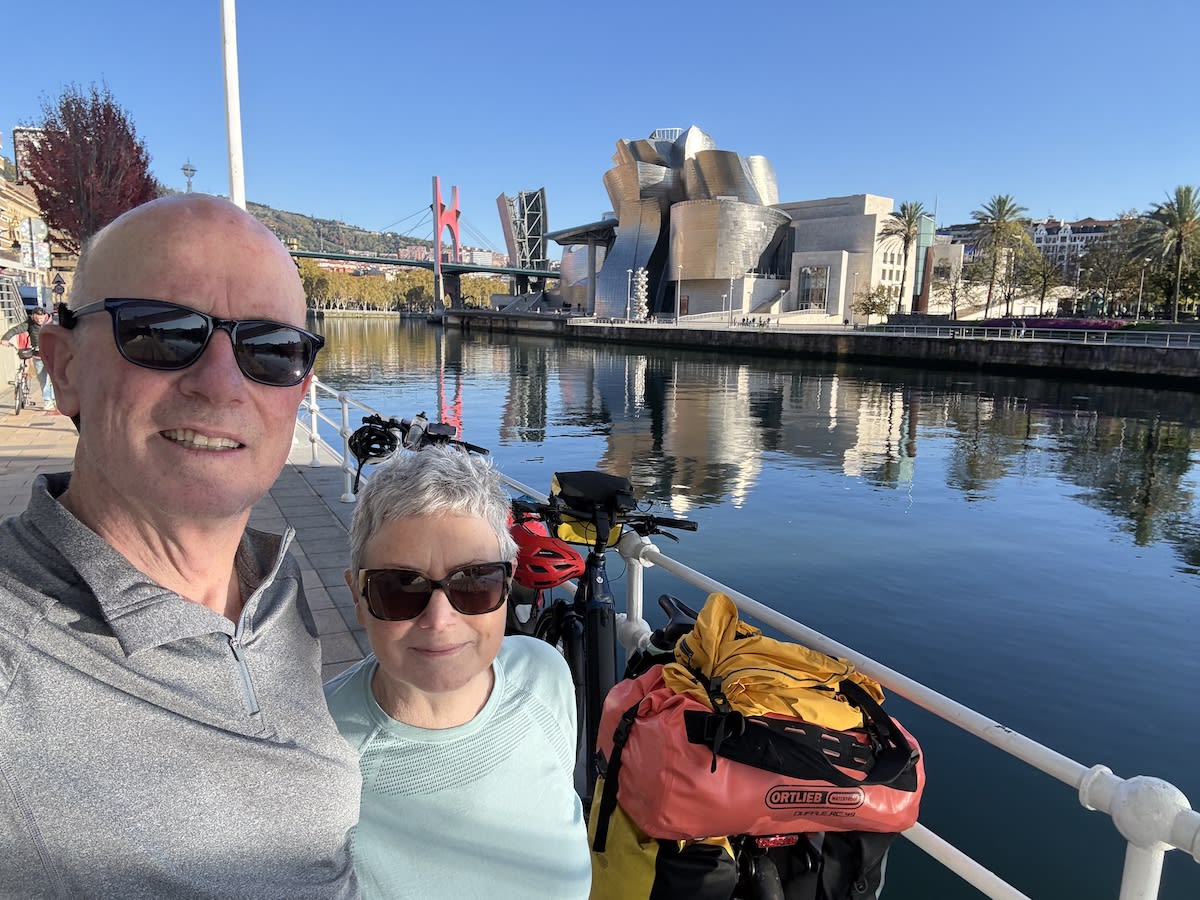
The Basque Country
Previous: Münster to Plymouth
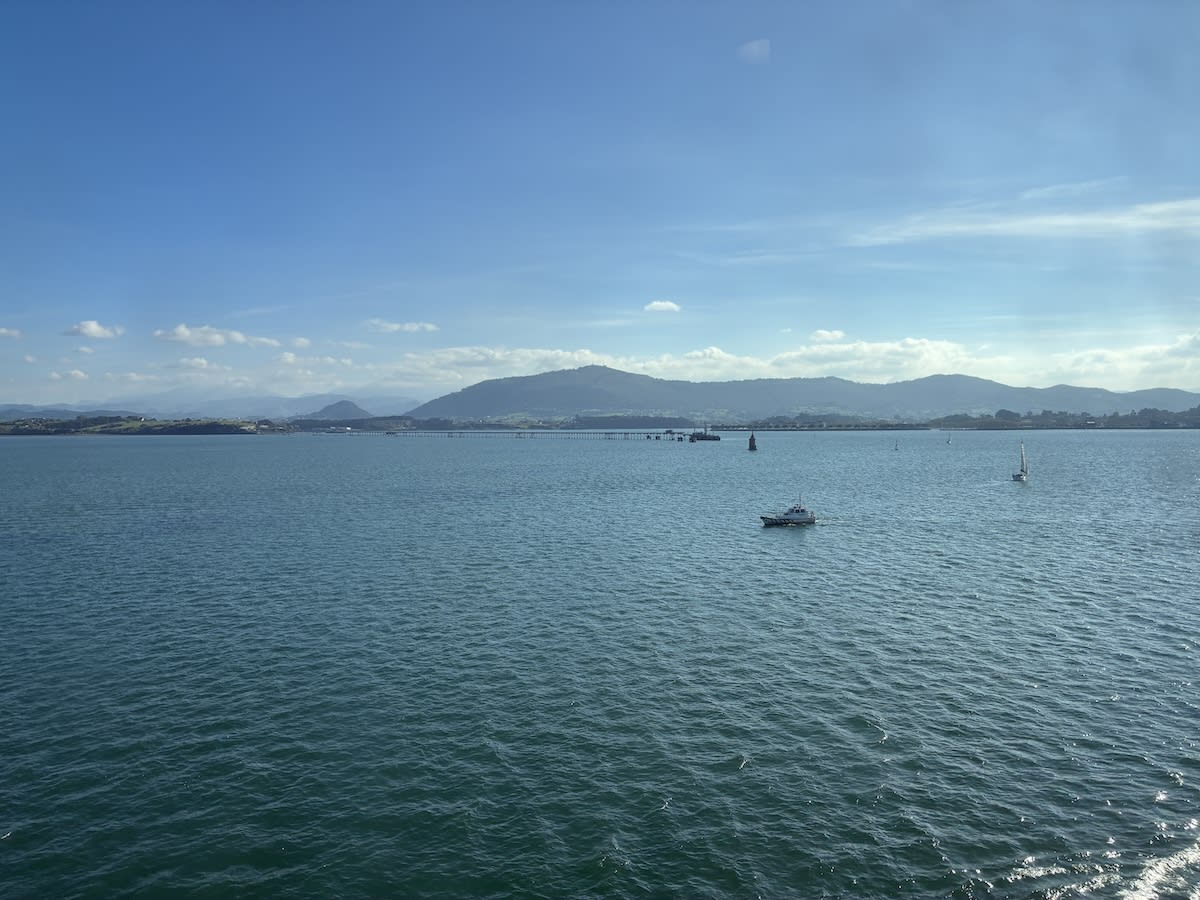
It would be fair to say that we pushed the boundaries of take-it-easiness on the hills of Cornwall. Our roll off the ferry into the port of Santander on a still, sunny afternoon was an opportunity to reset. The gentle 1.5-km ride along the seaside bike trail to our hotel was a good start. Hotel Bahia was a somewhat flasher establishment than we have been used to: the porter brought our bags to our 10th-floor room, which had sweeping views across the harbour to the distant green hills. The bikes had there own ground-floor room where they charged happily.
Despite it being all-saints day, Halloween mania still ruled the busy Sunday-night streets of Santander. We weaved our way, in search of a pinchos bar, between the milling crowds of scary children. We found a table outside Tapas Catedra in a quiet pedestrian street and made a shambolic mess of ordering in our near non-existent Spanish (the anchovy and blue cheese tostas were a bit much). Despite the language gap, it all seemed so much more relaxed, drinking vino tinto out on the street on a mild night. We hadn’t had a night since London when outside evening drinking or dining was something we even began to consider.
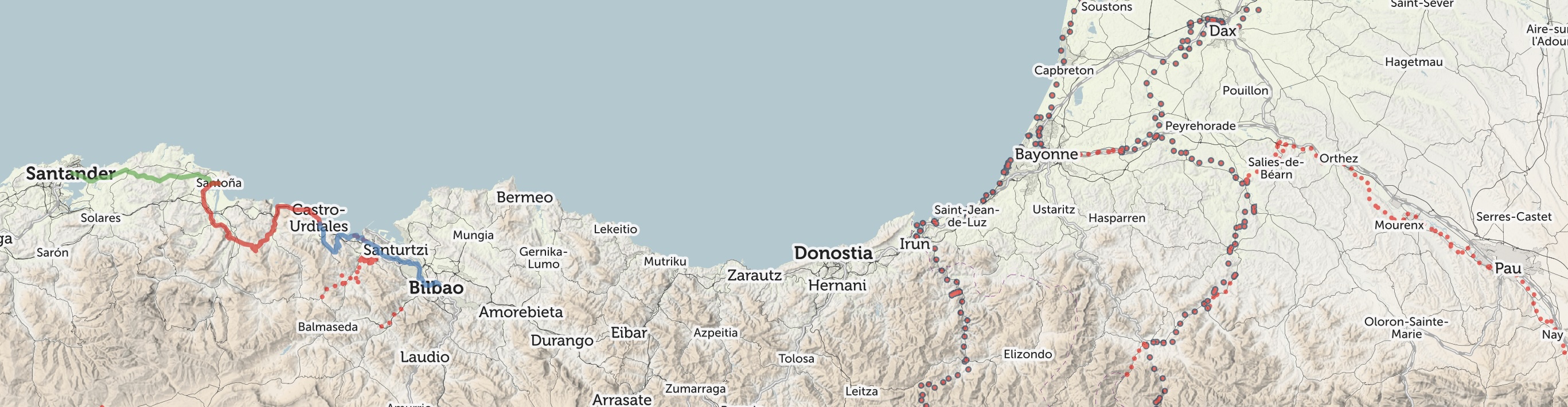
We had booked a place to stay in Bilbao for two weeks starting in 3 days time. Despite our determination to pull it back, we needed to head on our way the next morning, perhaps not giving Santander the time it deserves. Three more days before some serious down time.
Santander to Bilbao
More language challenges at a local bar the next morning, but we stumbled through and managed to order a zumo de naranja, dos cafes y dos cruseans more or less successfully. A brass band were setting up outside and we found ourselves at a memorial service for the Cabo Machichaco disaster of 1893 and 1894 (An amazing and terrifying story of which we were completely unaware: how travel broadens the mind).
Day 1 was a classically short take-it-easy day to Santona.
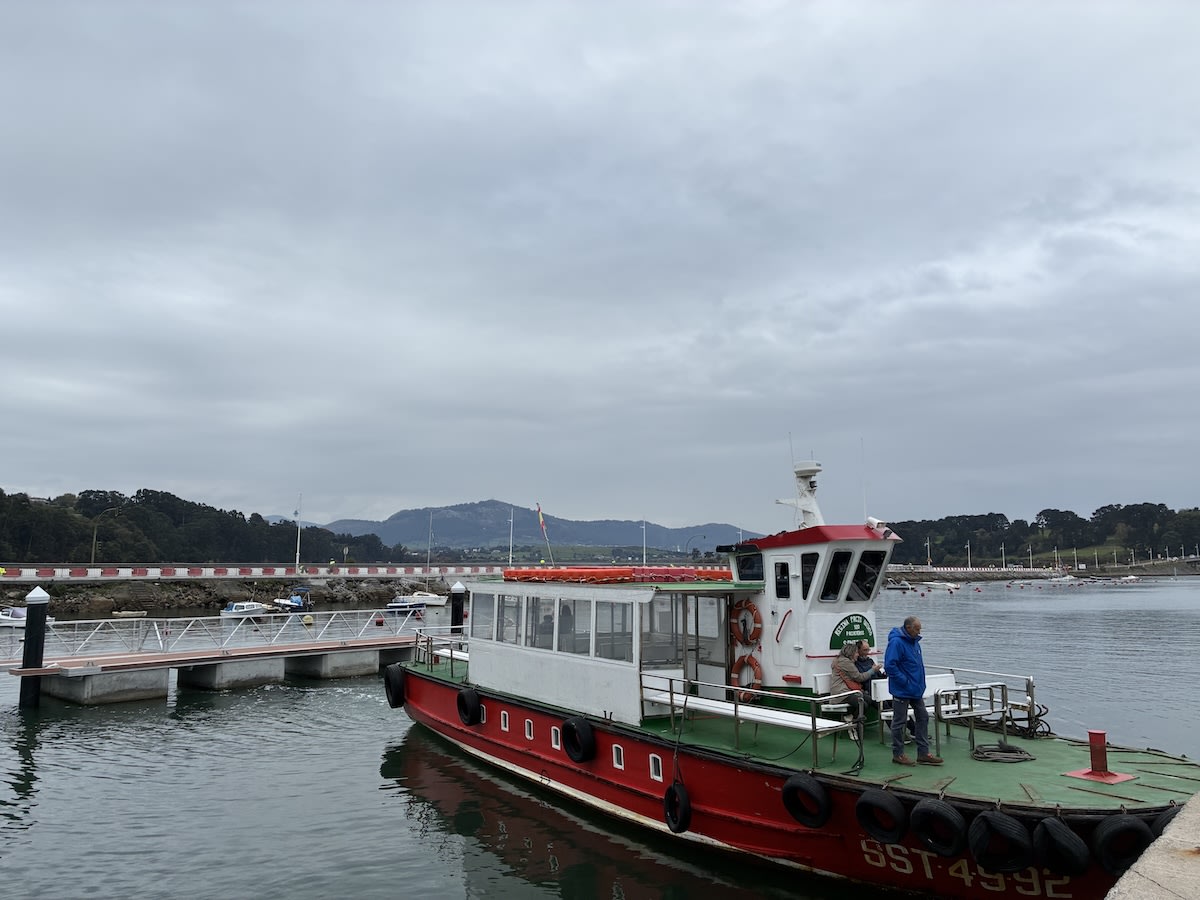
After checking out, we had a short ride along the harbour to the ferry that would take us to Somo on the other side of the harbour. We had an anxious half-an-hour wait there before we could be sure that there was no need to lift the bikes onto the ferry. But it was fine: the sloping docks ensured that the foredeck of the boat was at the same level and we were able to just roll the fully laden bikes on and off the boat.
On the other side of the harbour, feeling more relaxed, we had a second coffee at the beachside bar in Somo: one of Spain’s premier surf beaches. Then we headed off into the beautiful green countryside. We began on an off-road trail along a large road that wasn’t very busy at all. In fact all of the roads today were so much quieter than we had become used to in England, and the drivers so much more courteous.
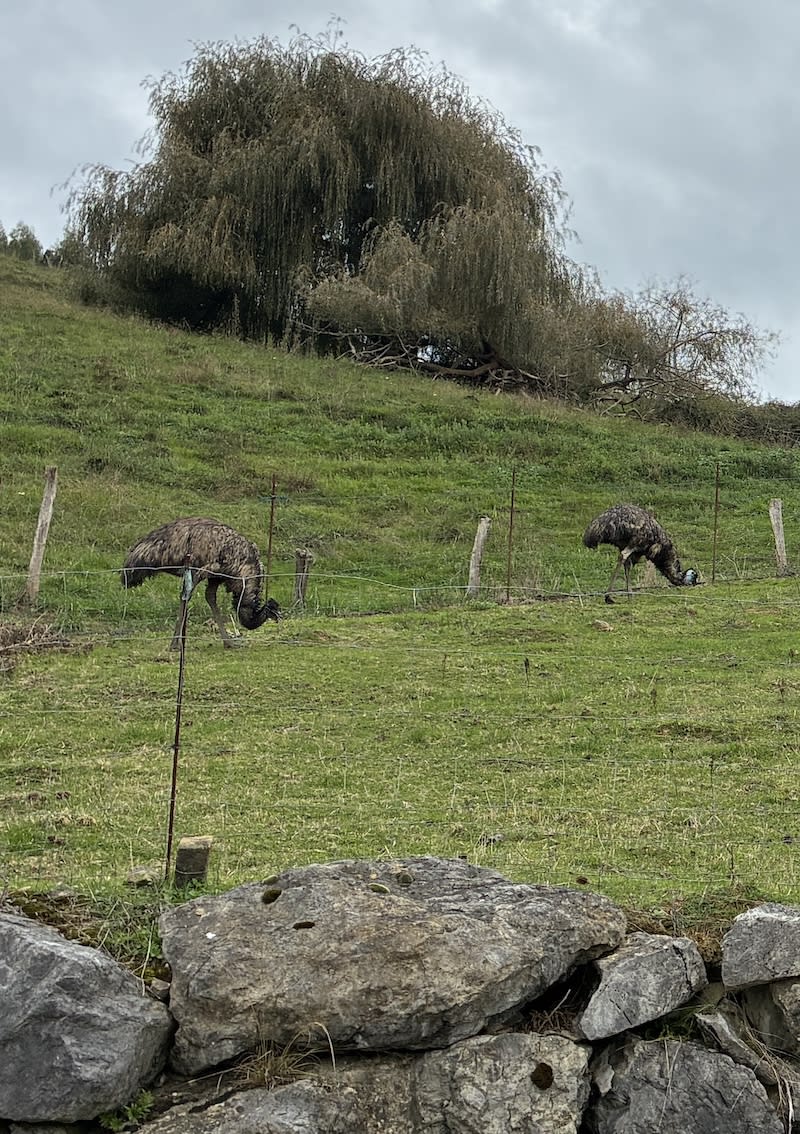
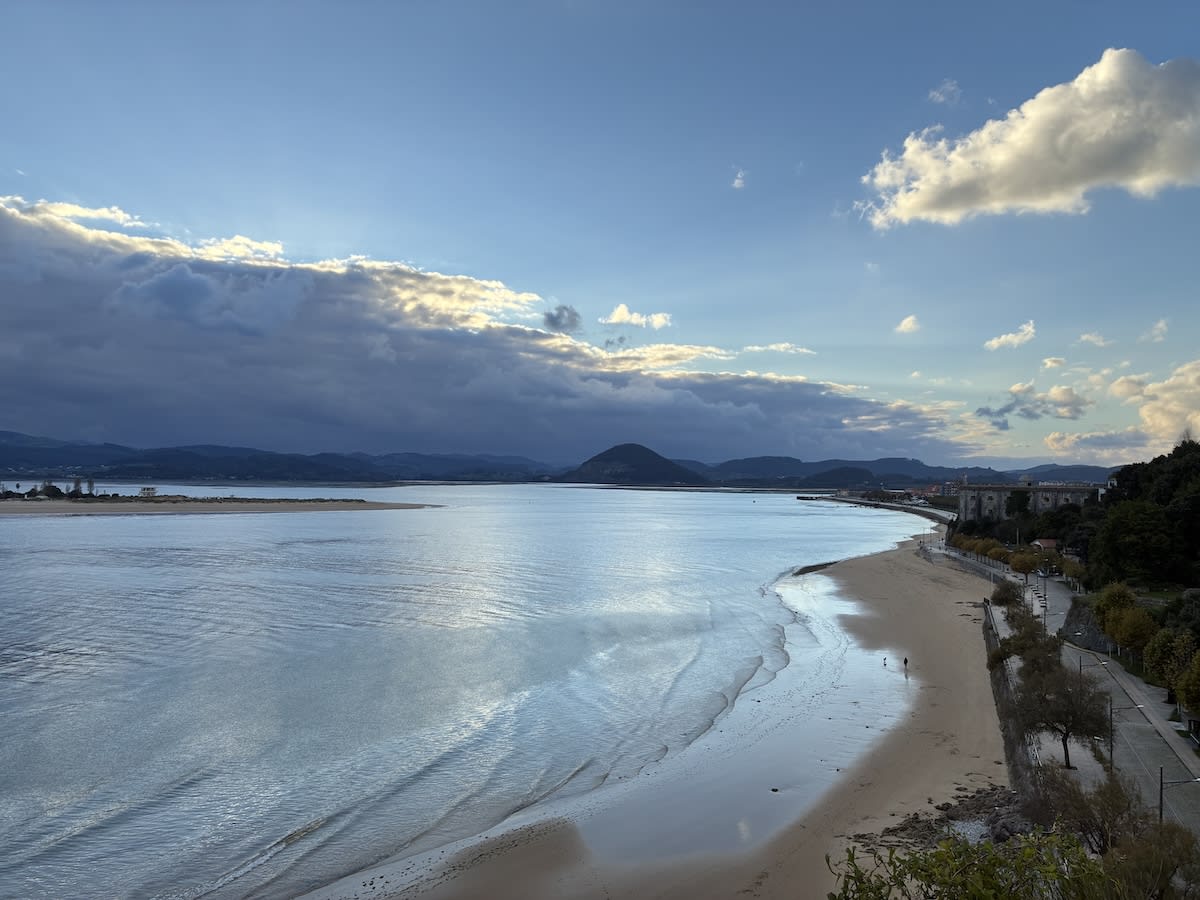
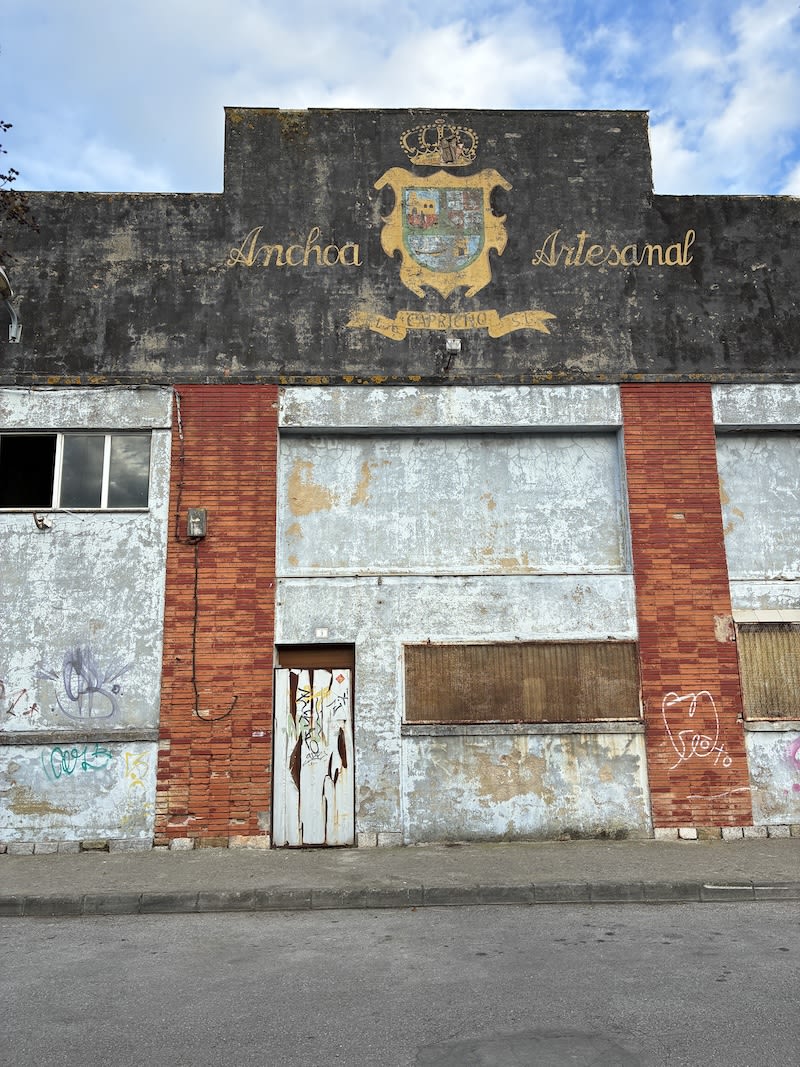
We negotiated one big hill through eucalypt forests (and even saw a couple of emus in one farm, which was all a bit weird). Finally down to the big Santoṉa inlet by 3 pm, giving us time for a walk around town. We took in some local anchovies in a portside bar. They were great, but what happened later that night left some unfortunate psychological scarring that dampened our appetite for anchovies for some time after. But before that, we took a long walk along the beach up around the fort, and back through the somewhat depressed town to our quite comfortable hotel.
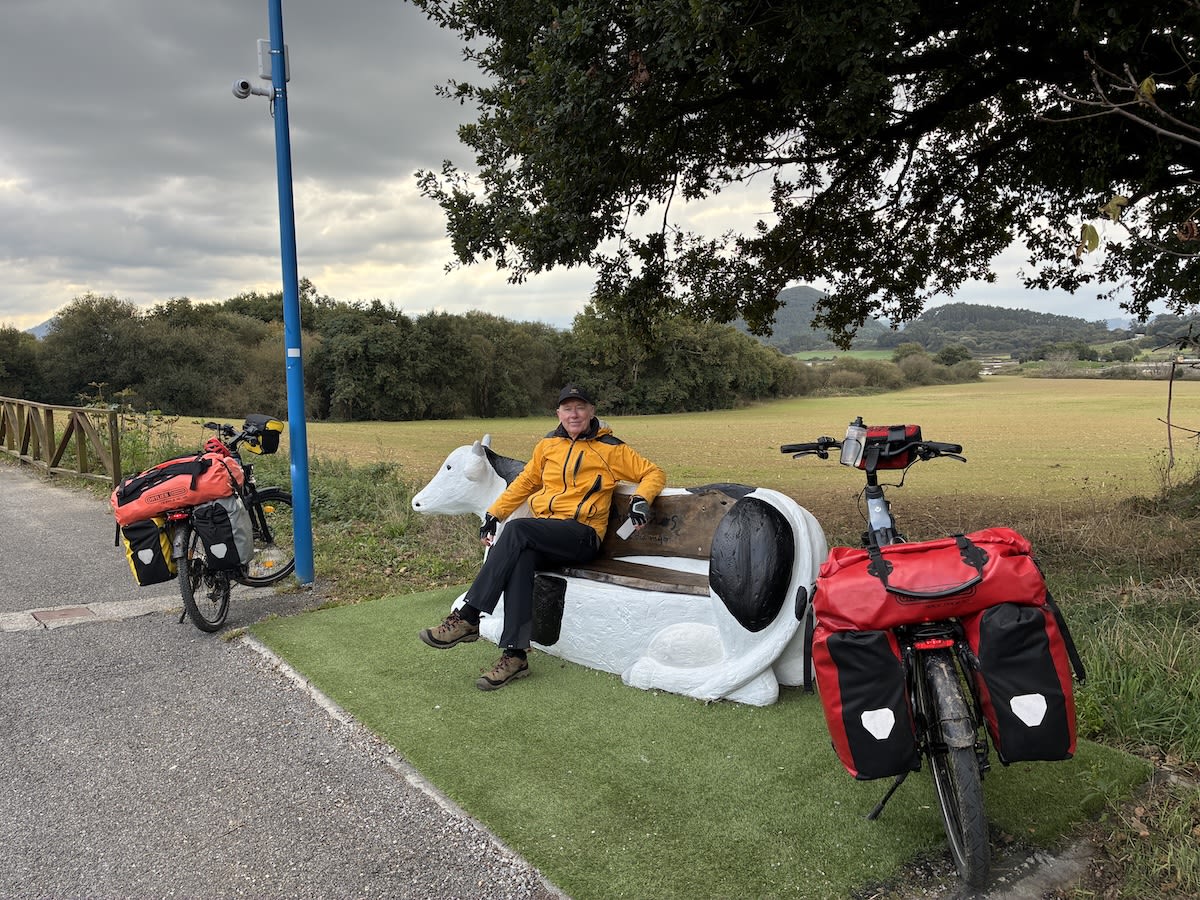
In an attempt to shift to local habits, we left it until 8 pm to wander around town in search of a bar that didn’t look too seedy for dinner, and settled on one a few doors up from our hotel. We ordered rabas, something else fried and tempura veggies and langoustines which proved to be a big mistake. At 2 AM, Chris woke feeling uneasy in the stomach, and soon found himself violently emptying his upper intestines. It was a distressing night.
By check-out time next morning, although somewhat wrung-out, Chris had no sign of an urgent need for the toilet, and no desire to spend another day in Santoṉa. So, we decided to try our luck at the ride to Castro Urdiales. It was tough, but we got there, with Chris relying on higher levels of motor assist than usual.
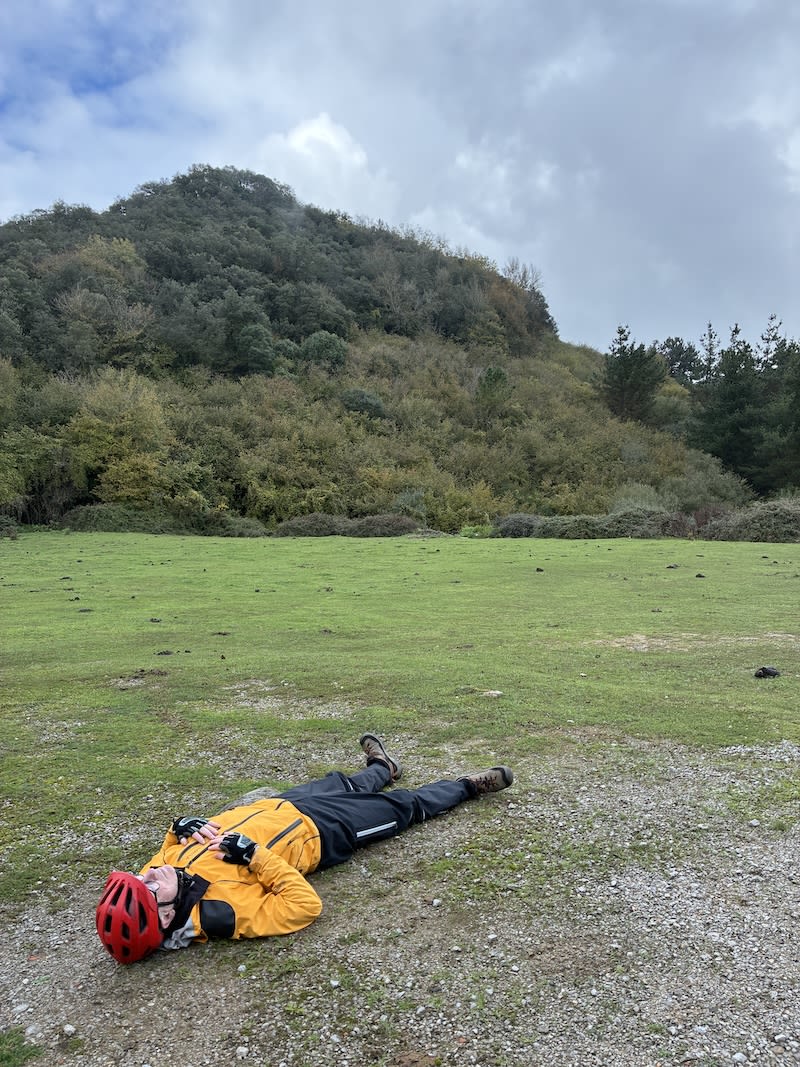
If we had have been there before November, we might have been able to take the small ferry across the harbour to Laredo (although the likely need to lift our bikes on and off the boat might have dissuaded us). As a result we needed to tackle the busy road 5 km up the estuary: it was busy enough, but still not as hair-raising as some less busy English roads we had encountered in the previous month. The main challenge of the day was a steady 300-m climb (and descent) along a large, but quiet road. After a long lie down among the cow pats at the top of the hill, it was a long roll down the hill (for which we really should have rugged up more).
At the bottom of the hill we turned onto a rough unsealed path/road along the small river down to the estuary. Once we hit the autopista, we were on a rough, puddly, unsealed road along noisy traffic for way too long into Castro Urdiales. It was a much prettier and well-heeled place than we had been steeling ourselves to expect after Santoṉa. It was a beachside bike path through the town to our reasonably flash hotel. Once we’d got to our room, Chris lay down on the bed and slept, and didn’t get up again for 14 hours. Maree dined alone.
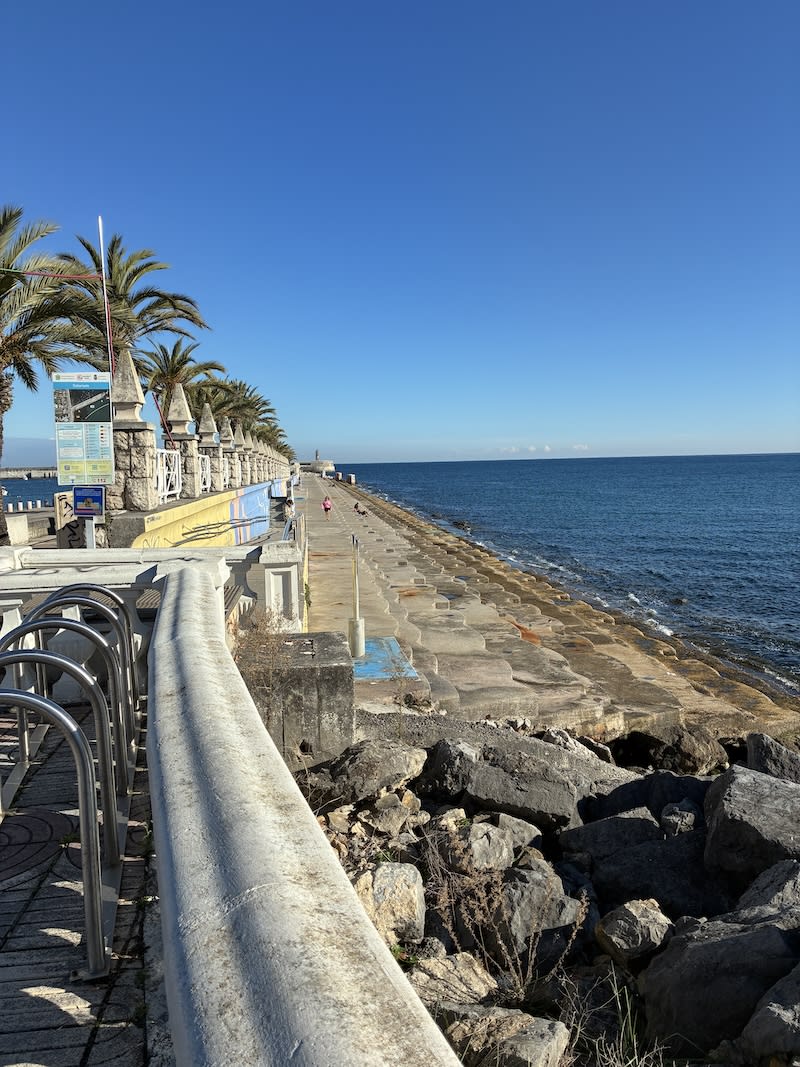
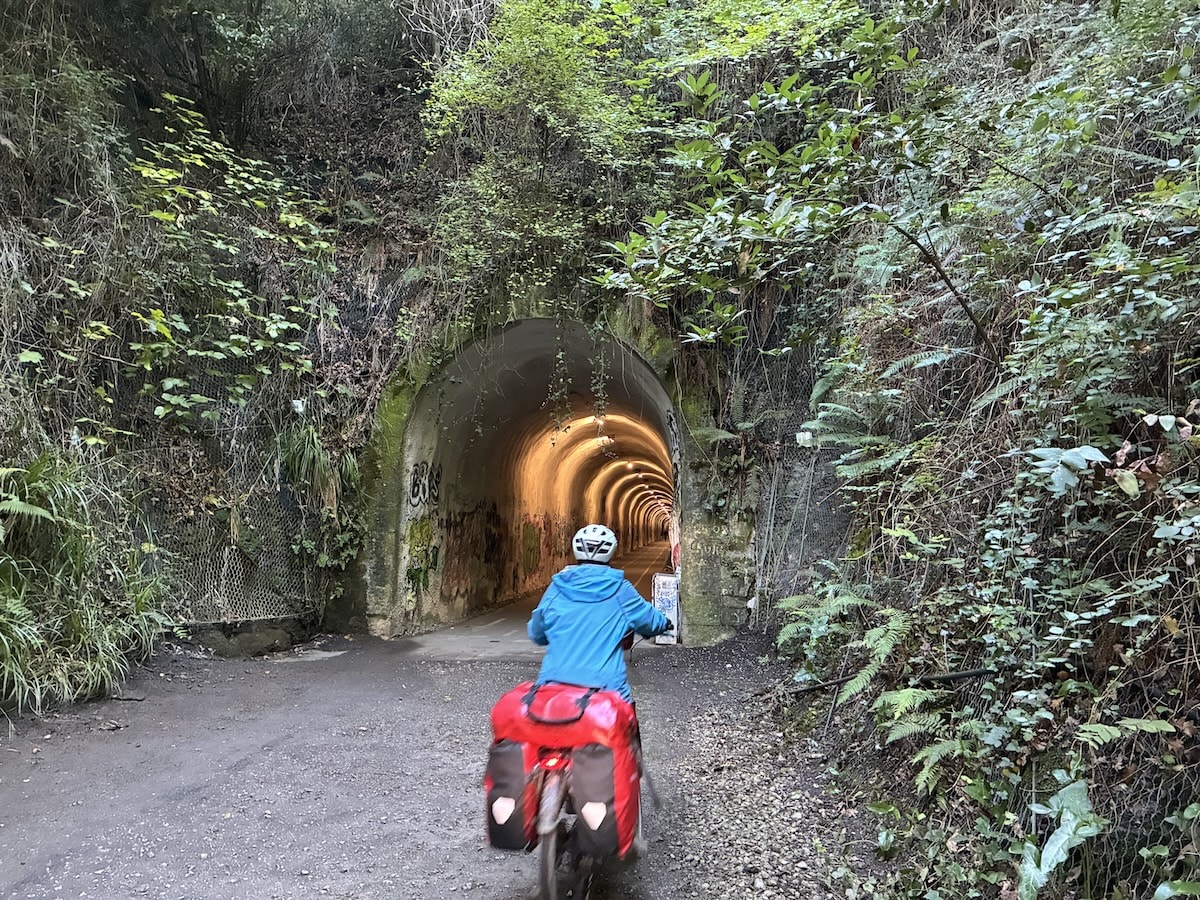
After a tentative breakfast (for Chris), we headed out for the 47 km ride to Bilbao. We first back-tracked along the waterfront for a look around in better weather (and health) than the previous night. Then back past the hotel, through a few suburban streets, up a steep hill onto an unsealed path leading to an old railway tunnel, opening to a gently rising rail trail. We took advantage of the morning sun with a couple of bench rests along the way. We finally took a hairpin bend onto a small, quiet road, shooting up the hill more steeply.
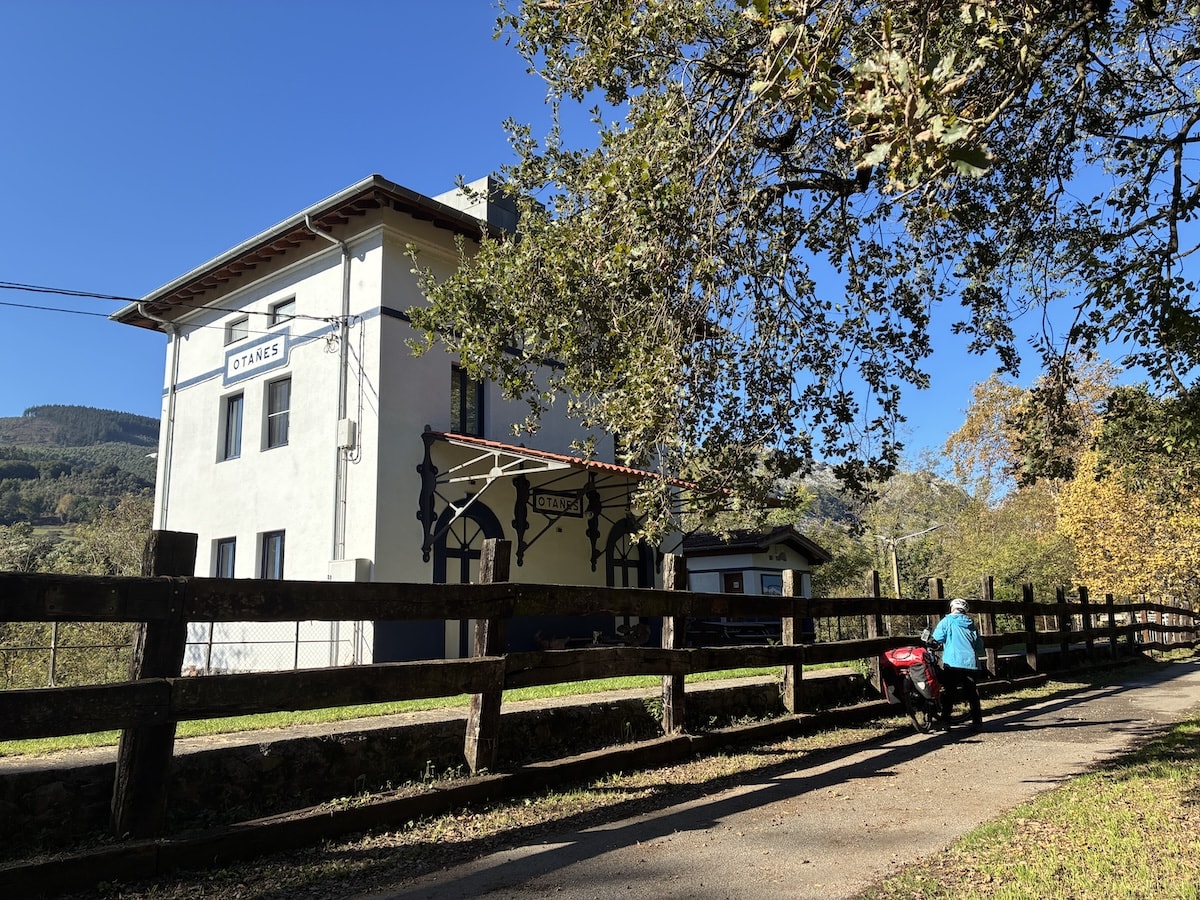
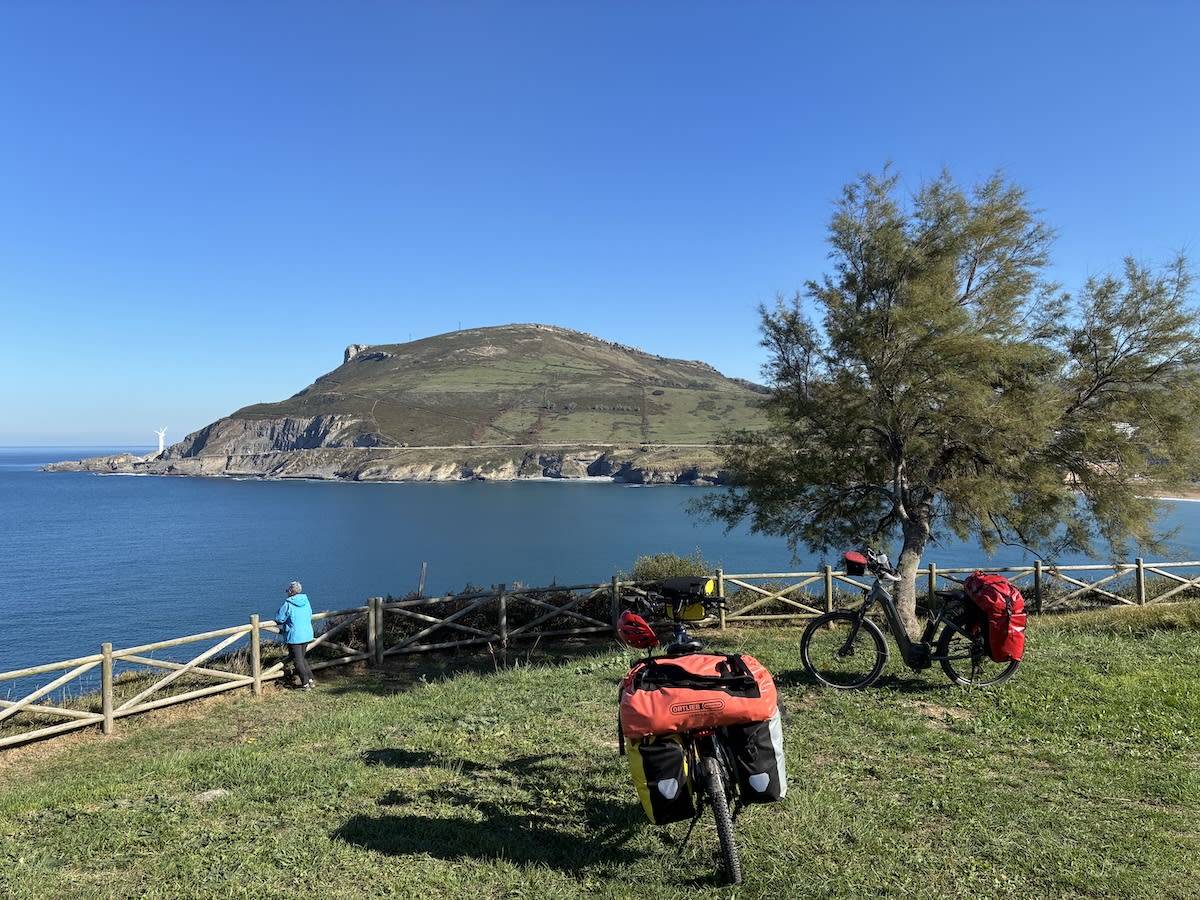
Over the other side to a larger road, where we briefly backtracked before plunging down a small lane through a small village. That led us out onto another rail trail that took us along the valley side and under the autopista (The sluggish trucky traffic made us happy not to be up there.) From there, the trail took us along the beautiful coastal cliffs, through the odd tunnel before taking us up a hill towards the beachy inlet of La Arena. But the route had one last surprise in store for us before we got there.
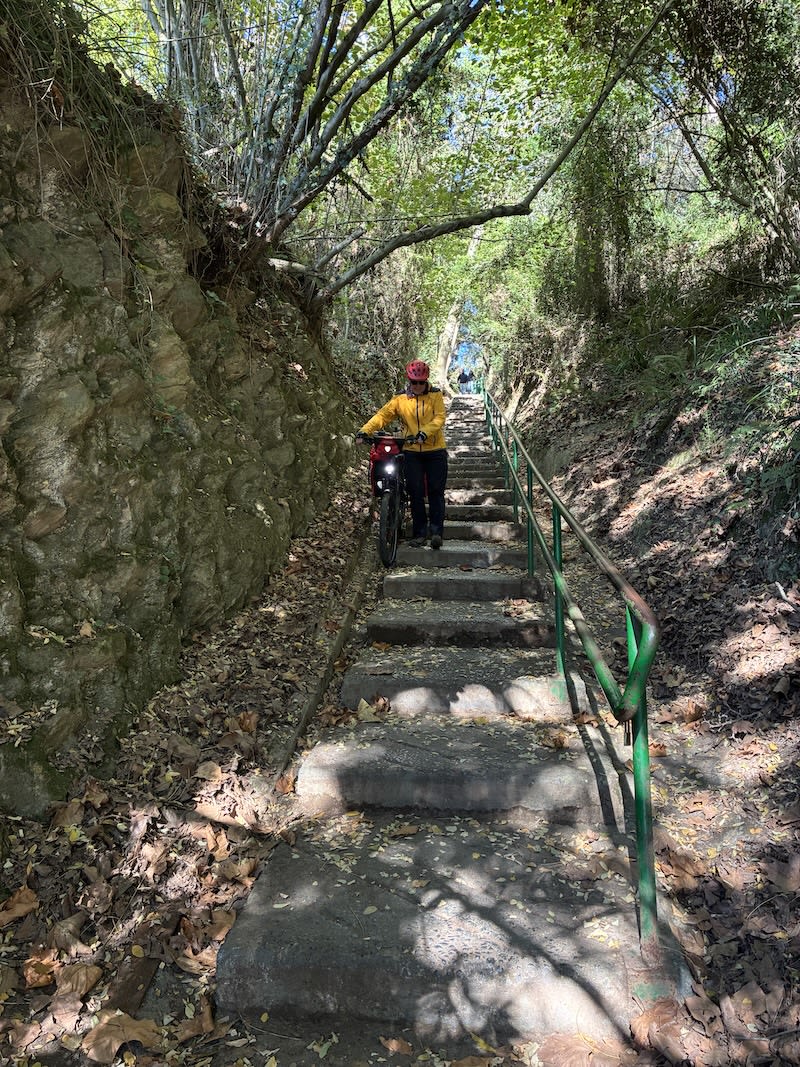
Suddenly we were at the top of 125 m of steep steps leading down to the beach. The deeply incised ramp next to the stairs was a challenge to wheel/skid the bikes down. Having got both bikes down without incident, we rested on a bench overlooking a small inlet beach for a while before heading left over the footbridge onto La Arena beach. We had to cross the beach through the sand (which was not too difficult with walk mode). During a short stop at La Arena to look at the surf (another famous Spanish surf beach, with beautiful little waves today and lots of surfers on them), we contemplated a lunch stop at the beach cafe. But bars were still not attractive to either of us after Santoṉa.
We headed up the road, away from the beach, for a block, before turning onto a car-free bike trail that took us up the big hill and then down along the valley all the way into Bilbao. A very civilised entrance to a city. Bilbao’s bike paths pretty much took us all the way to our apartment: home for the next two weeks!